Physical Address
304 North Cardinal St.
Dorchester Center, MA 02124
Physical Address
304 North Cardinal St.
Dorchester Center, MA 02124

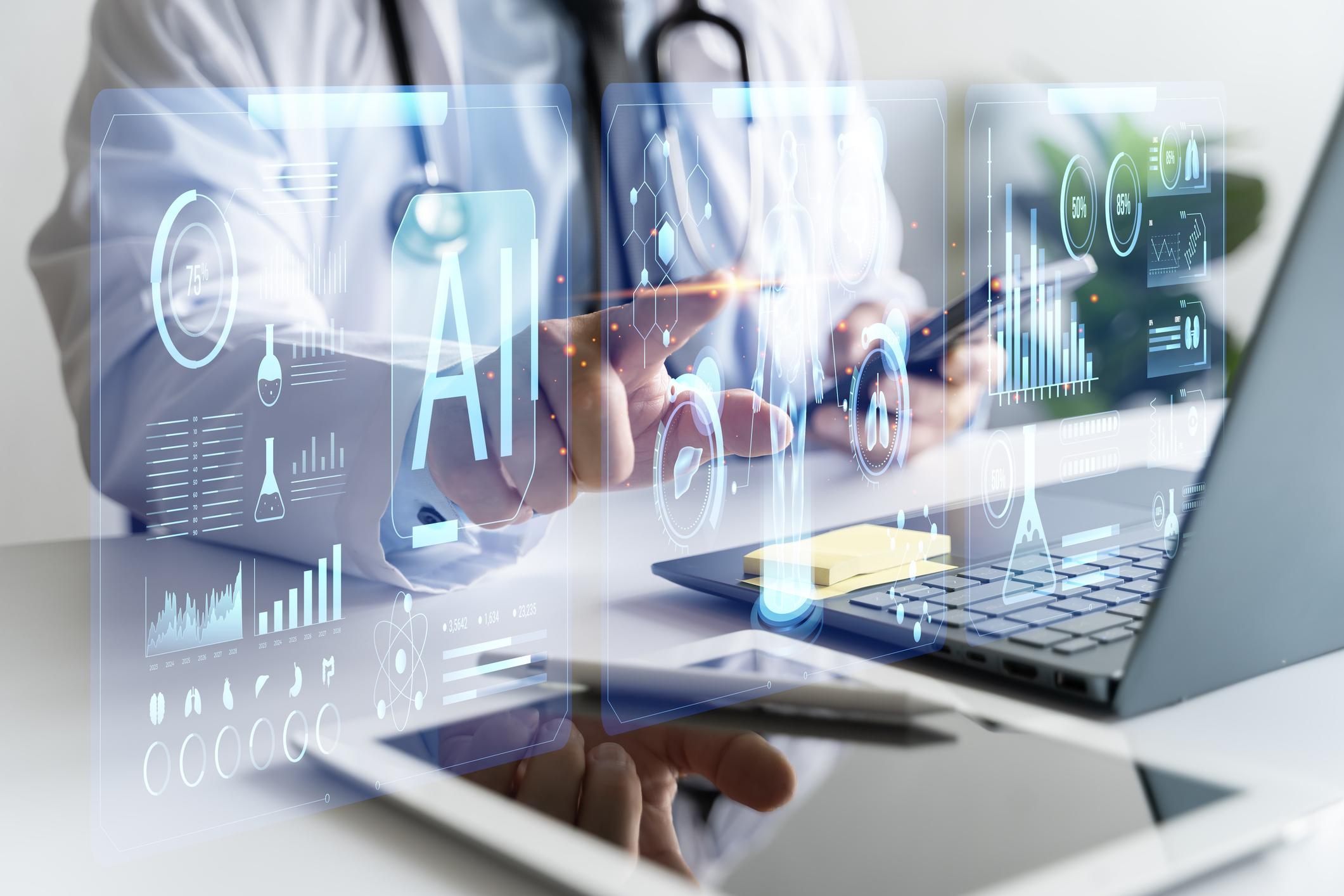
Healthcare is evolving rapidly—but one challenge remains persistent: finding the right clinical partner. Whether it’s a Nurse Practitioner seeking a collaborating physician or a healthcare organization building a compliant care model, matching the right professionals has traditionally been slow, manual, and inefficient.
Today, machine learning healthcare systems are transforming this process. AI-powered platforms are redefining how clinicians connect—using data, predictive modeling, and intelligent matching to remove friction from collaboration.
Welcome to the era of AI physician matching.
Historically, matching Nurse Practitioners (NPs) with collaborating physicians relied on:
This process lacked personalization, compliance intelligence, and predictive insight. It often led to mismatched expectations, regulatory issues, and wasted time.
Healthcare requires more than a list—it requires intelligent compatibility.
At its core, machine learning (ML) analyzes large volumes of data to identify patterns and make predictions. In healthcare collaboration, ML systems evaluate multiple structured and unstructured data points to generate optimal matches.
These systems rely on healthcare recommendation algorithms similar to those used by streaming platforms—but adapted for clinical compliance and professional compatibility.
Instead of recommending a movie, the system recommends a physician collaborator who aligns with:
The result? Precision matching rather than random pairing.
The AI engine gathers multidimensional inputs such as:
This creates a dynamic data profile for both NPs and physicians.
Using predictive algorithms healthcare systems can forecast:
These predictions are based on historical match success patterns and ongoing learning loops.
Rather than presenting dozens of irrelevant options, AI filters results and ranks them by compatibility score.
This reduces decision fatigue and accelerates onboarding.
One platform leveraging artificial intelligence matching to solve real workforce bottlenecks is NP Collaborator.
NP Collaborator integrates ML-driven matching systems to help Nurse Practitioners connect with compliant collaborating physicians efficiently and securely.
Instead of weeks of searching and uncertainty, NPs receive curated matches aligned with their clinical and legal needs.
This is not just a directory—it’s a data-driven collaboration engine.
As the healthcare staffing crisis continues, efficiency becomes critical. AI matching systems:
ML healthcare applications are especially valuable in reduced-practice states where collaborating physician requirements create bottlenecks.
By automating match intelligence, AI helps remove structural barriers to care delivery.
While AI offers powerful benefits, responsible implementation is essential.
High-quality systems must ensure:
Machine learning should enhance clinical relationships—not replace professional judgment.
Organizations leveraging AI physician matching gain:
In a system strained by workforce shortages, technology becomes the force multiplier.
The true power of machine learning healthcare systems is not in the code—it’s in the outcomes.
When AI connects the right professionals:
AI-driven healthcare recommendation algorithms are no longer experimental—they are foundational to modern care models.
Healthcare collaboration is too important to rely on manual matchmaking. As AI continues to mature, intelligent systems will define how clinicians connect, comply, and scale.
Platforms like NP Collaborator demonstrate how ML healthcare applications can solve real-world workforce constraints—transforming regulatory complexity into streamlined opportunity.
The future of healthcare collaboration isn’t random.
It’s predictive.
It’s data-driven.
It’s intelligent.