Physical Address
304 North Cardinal St.
Dorchester Center, MA 02124
Physical Address
304 North Cardinal St.
Dorchester Center, MA 02124

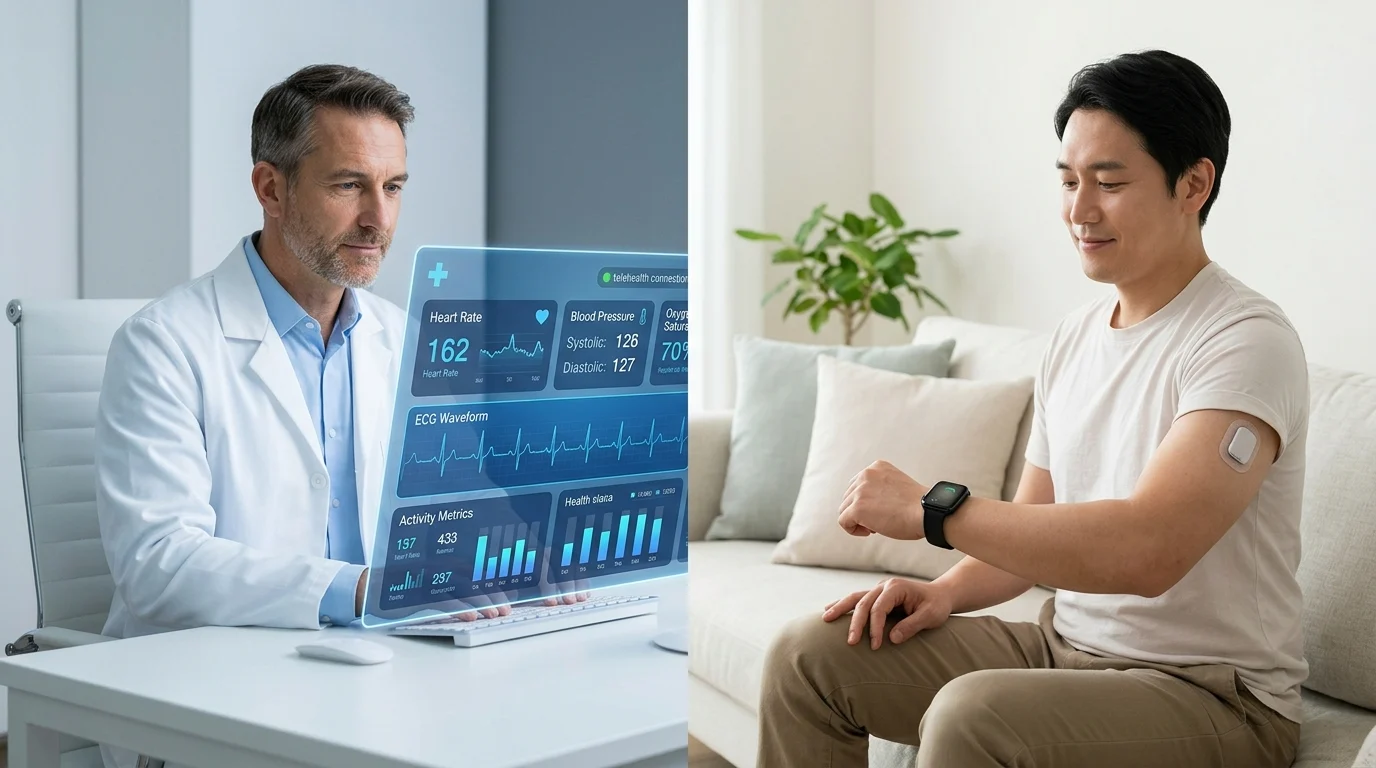
The healthcare industry is undergoing a digital transformation unlike anything seen before. Innovations in connected technology have made it possible for healthcare providers to monitor patients beyond the walls of hospitals and clinics. Among the most impactful advancements are wearables in healthcare and remote patient monitoring (RPM), two technologies that are changing how chronic diseases are managed, preventive care is delivered, and patient outcomes are improved.
As healthcare systems continue to shift toward value-based care, wearable devices and remote monitoring solutions are becoming essential tools for physicians, nurse practitioners, and healthcare organizations. These technologies not only improve clinical decision-making but also empower patients to take an active role in managing their health.
Wearables in healthcare are smart electronic devices that continuously collect health-related data from patients. Unlike traditional medical equipment that requires hospital visits, wearables allow healthcare providers to receive real-time health information while patients continue their normal daily activities.
Common healthcare wearables include:
Modern wearable devices are capable of collecting thousands of health data points every day, providing clinicians with a much more comprehensive picture of a patient’s health than periodic office visits alone.
Remote patient monitoring (RPM) is the use of digital technologies to collect medical data from patients outside traditional healthcare settings and securely transmit that information to healthcare providers for evaluation.
RPM programs typically include:
Rather than waiting for symptoms to worsen, providers can identify concerning trends early and intervene before complications develop.
Healthcare providers are increasingly adopting remote patient monitoring because it helps solve many long-standing challenges within healthcare delivery.
Millions of patients live with chronic diseases such as:
These conditions require continuous monitoring rather than occasional office visits.
RPM enables providers to monitor daily health metrics and make treatment adjustments before patients experience serious complications.
Continuous monitoring helps identify subtle changes that might otherwise go unnoticed.
Examples include:
Early intervention often prevents emergency room visits and hospital admissions.
Patients who regularly view their own health data become more engaged in their treatment plans.
Wearable devices encourage healthier behaviors by helping individuals monitor:
Greater engagement often leads to improved long-term outcomes.
One of the biggest advantages of remote patient monitoring is reducing avoidable hospital readmissions.
Patients recovering from surgery or managing chronic illnesses can safely recover at home while clinicians continue monitoring their condition remotely.
Healthcare organizations benefit from:
Preventive healthcare has traditionally relied on annual physical examinations and occasional screenings.
Wearable technology changes this model by providing continuous health monitoring throughout the year.
For example:
A smartwatch detecting an irregular heartbeat may prompt a patient to seek medical attention before a stroke occurs.
Similarly, continuous glucose monitors help diabetic patients maintain better glucose control, reducing long-term complications.
This shift from reactive care to proactive prevention represents one of healthcare’s most significant advancements.
The large volume of data generated by wearable devices would be difficult to interpret manually.
Artificial intelligence (AI) helps providers by:
Instead of reviewing thousands of daily readings, clinicians receive actionable insights that improve efficiency without compromising patient care.
Despite their many advantages, these technologies present several challenges.
Healthcare organizations must ensure that wearable devices comply with strict privacy regulations.
Important considerations include:
Protecting sensitive patient information remains a top priority.
Not all consumer-grade wearable devices provide medical-grade accuracy.
Healthcare providers should evaluate:
Using validated devices improves confidence in clinical decision-making.
Some patients, particularly older adults, may struggle with wearable technology.
Healthcare providers can improve adoption through:
A positive user experience increases long-term participation in RPM programs.
As remote patient monitoring expands, effective care increasingly depends on strong communication among healthcare professionals. Patients with chronic conditions often receive care from primary care physicians, specialists, nurse practitioners, therapists, and care coordinators. Sharing wearable-generated data across this multidisciplinary team ensures that everyone has access to the same clinical information, leading to faster decisions and more coordinated treatment plans.
Strong physician collaboration also helps reduce duplicate testing, improve care transitions, and create a more personalized experience for patients. Healthcare professionals looking to build collaborative relationships, particularly in states where practice agreements are required, can benefit from resources such as Npcollaborator.com, a platform that helps connect nurse practitioners with collaborating physicians while supporting modern, team-based healthcare delivery.
The next generation of connected healthcare will extend beyond simple monitoring.
Future innovations may include:
Healthcare providers will increasingly rely on connected technologies to improve efficiency, reduce costs, and deliver better patient outcomes.
Wearables in healthcare and remote patient monitoring are transforming how healthcare is delivered. Rather than relying solely on periodic clinic visits, providers now have access to continuous, real-time patient data that supports earlier intervention, better chronic disease management, and more personalized care.
While challenges related to privacy, data management, and technology adoption remain, ongoing advances in artificial intelligence, interoperability, and connected devices continue to strengthen the value of these solutions.
As healthcare moves toward a more collaborative and patient-centered model, wearable technology and remote patient monitoring will play a central role in improving outcomes, enhancing patient engagement, and shaping the future of connected healthcare.