Physical Address
304 North Cardinal St.
Dorchester Center, MA 02124
Physical Address
304 North Cardinal St.
Dorchester Center, MA 02124

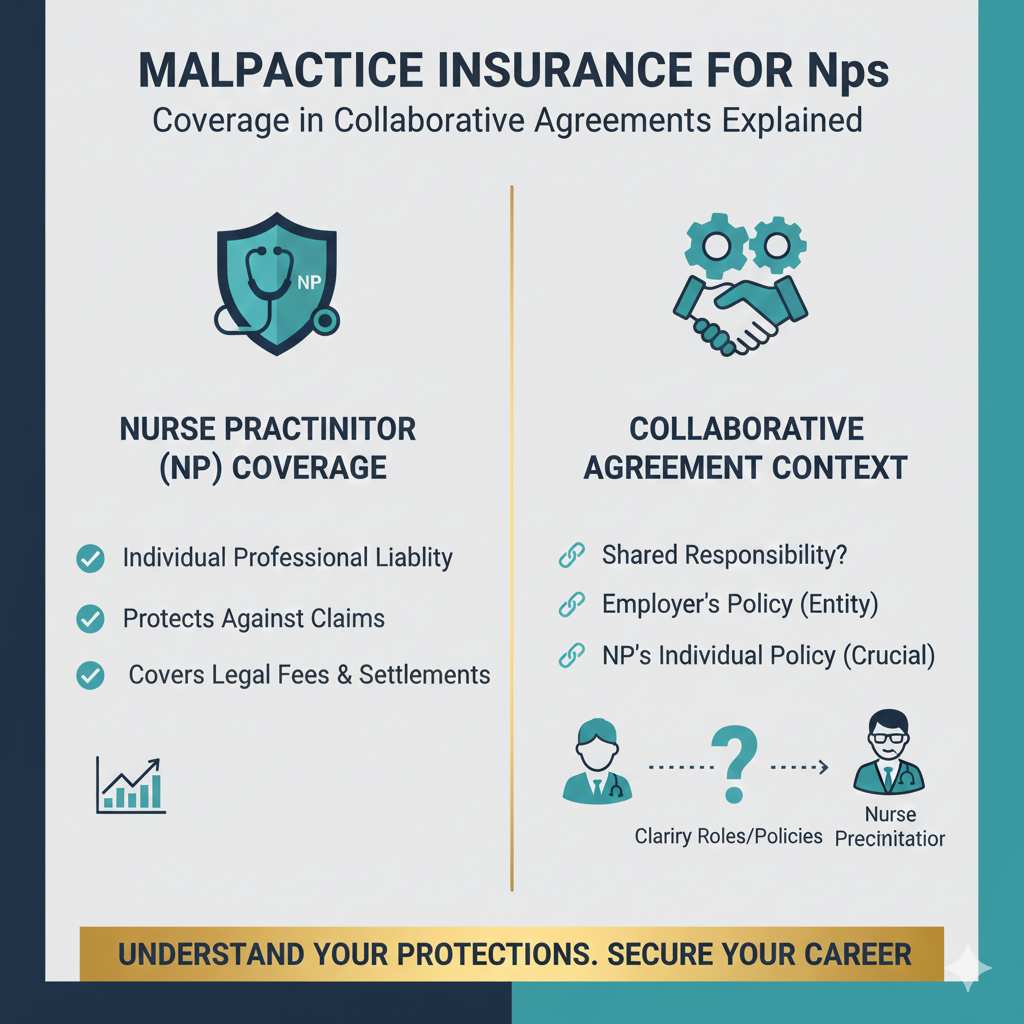
As nurse practitioners (NPs) take on expanded clinical roles across the U.S., malpractice insurance has become one of the most critical—and misunderstood—parts of professional risk management.
For NPs working under collaborative agreements, the confusion often deepens:
Am I covered under the physician’s policy? Do I need my own insurance? Who is liable if something goes wrong?
This guide breaks down what NP malpractice insurance actually includes, how collaborative physician liability works, and what NPs must clarify before signing any agreement.
With increased patient autonomy, prescriptive authority, and leadership responsibilities, NPs face growing exposure to professional liability claims. Even in collaborative practice states, NPs are not immune from lawsuits.
Key drivers of increased risk include:
Understanding your nurse practitioner insurance requirements is no longer optional—it’s essential.
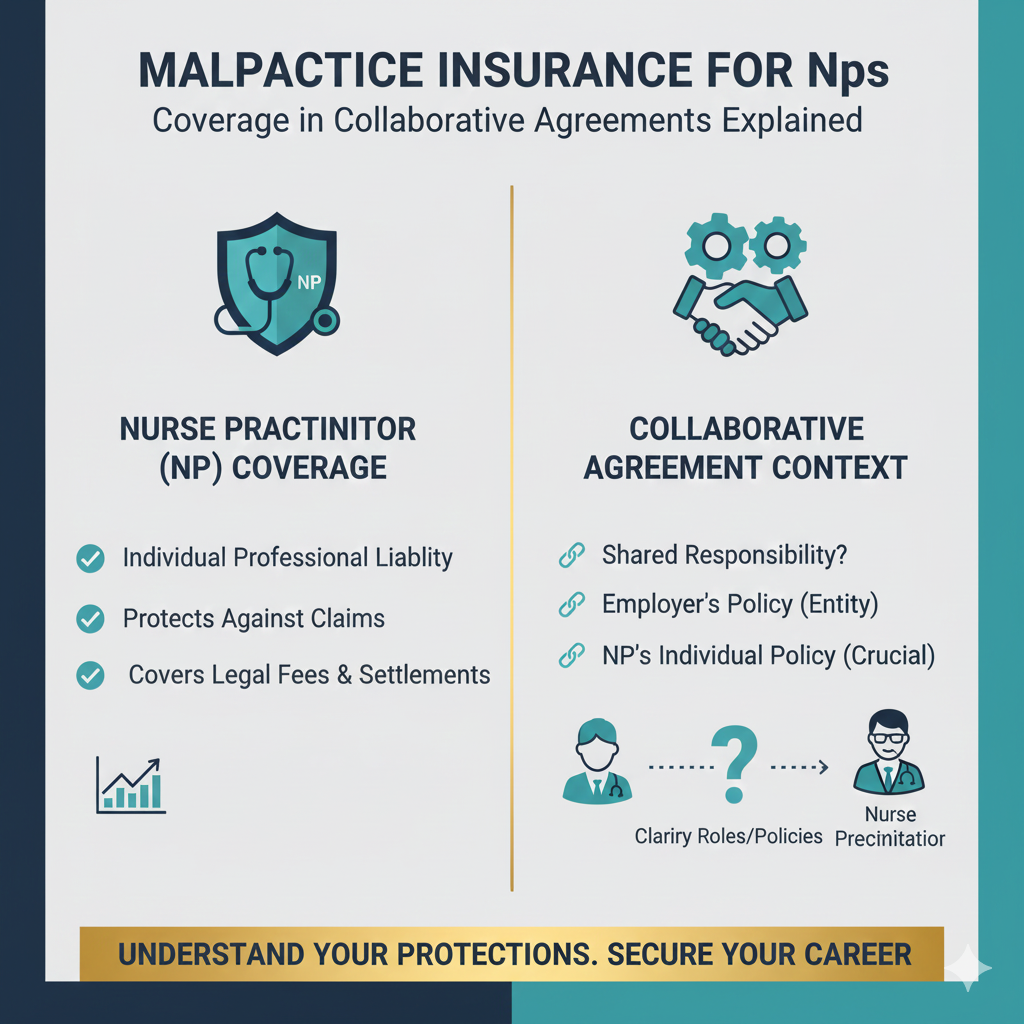
NP malpractice insurance, also known as professional liability coverage, protects nurse practitioners against claims of negligence, errors, or omissions related to patient care.
Typical coverage includes:
However, coverage details can vary significantly depending on employment status and collaborative agreements.
In states that require physician collaboration or supervision, many NPs assume they’re automatically covered under the collaborating physician’s malpractice policy. This is often incorrect.
In reality, collaborative physician liability and NP liability are frequently insured separately.
| Coverage Area | Usually Included | Often Excluded |
|---|---|---|
| Physician’s clinical acts | ✔ Yes | — |
| NP’s independent decisions | ❌ No | ✔ Yes |
| Legal defense for NP | ❌ Rarely | ✔ Yes |
| Licensing board complaints | ❌ No | ✔ Yes |
| Moonlighting / side practice | ❌ No | ✔ Yes |
| Telehealth across states | ❌ Limited | ✔ Yes |
Key takeaway:
Most collaborative agreements do not automatically extend malpractice coverage to the NP unless explicitly stated—and even then, coverage limits may be inadequate.
In almost all cases, yes.
Even if:
You should still carry individual NP malpractice insurance.
This is especially critical for NPs planning to open practices, provide telehealth services, or work across multiple facilities.
State regulations strongly influence medical malpractice NP requirements.
Some states:
Others are less explicit—but lack of clarity does not mean lack of liability.
NPs must align:
Failing to align all four creates legal exposure.
| Feature | Individual NP Policy | Employer/Physician Policy |
|---|---|---|
| NP named insured | ✔ Yes | ❌ No |
| Control over policy | ✔ Full | ❌ Limited |
| Portability | ✔ Yes | ❌ No |
| Licensing defense | ✔ Often included | ❌ Rare |
| Coverage gaps | ❌ Minimal | ✔ Common |
This comparison highlights why many risk-management professionals recommend standalone insurance for nurse practitioners—even in collaborative settings.
One overlooked risk factor is poorly structured collaboration.
When NPs struggle to find clear, compliant collaborative relationships, they may:
Platforms like NP Collaborator help address this gap by:
While collaboration platforms don’t replace insurance, they play a key role in preventing risk before it becomes a claim.
Before finalizing any agreement, ask:
If answers are unclear, consult an insurance professional or attorney.
For nurse practitioners, malpractice insurance is not just a requirement—it’s a career safeguard.
Whether you’re newly certified, transitioning roles, or navigating collaborative practice laws, understanding what’s included (and excluded) in malpractice coverage is essential to long-term success.